


Latchways Transfasteners and When to Use Them
In industries where working at height is part of daily operations, safety is critical. Reliable fall protection systems not only safeguard workers but also help organisations comply with regulations and avoid costly incidents. One of the most trusted and innovative solutions in modern fall protection is the Latchways Transfastener system, including the highly versatile Latchways Removable Transfastener. These devices play a vital role in horizontal lifeline systems, providing continuous attachment and freedom of movement. Understanding how they work and when to use them can help ensure safer working environments.
What Are Latchways Transfasteners?
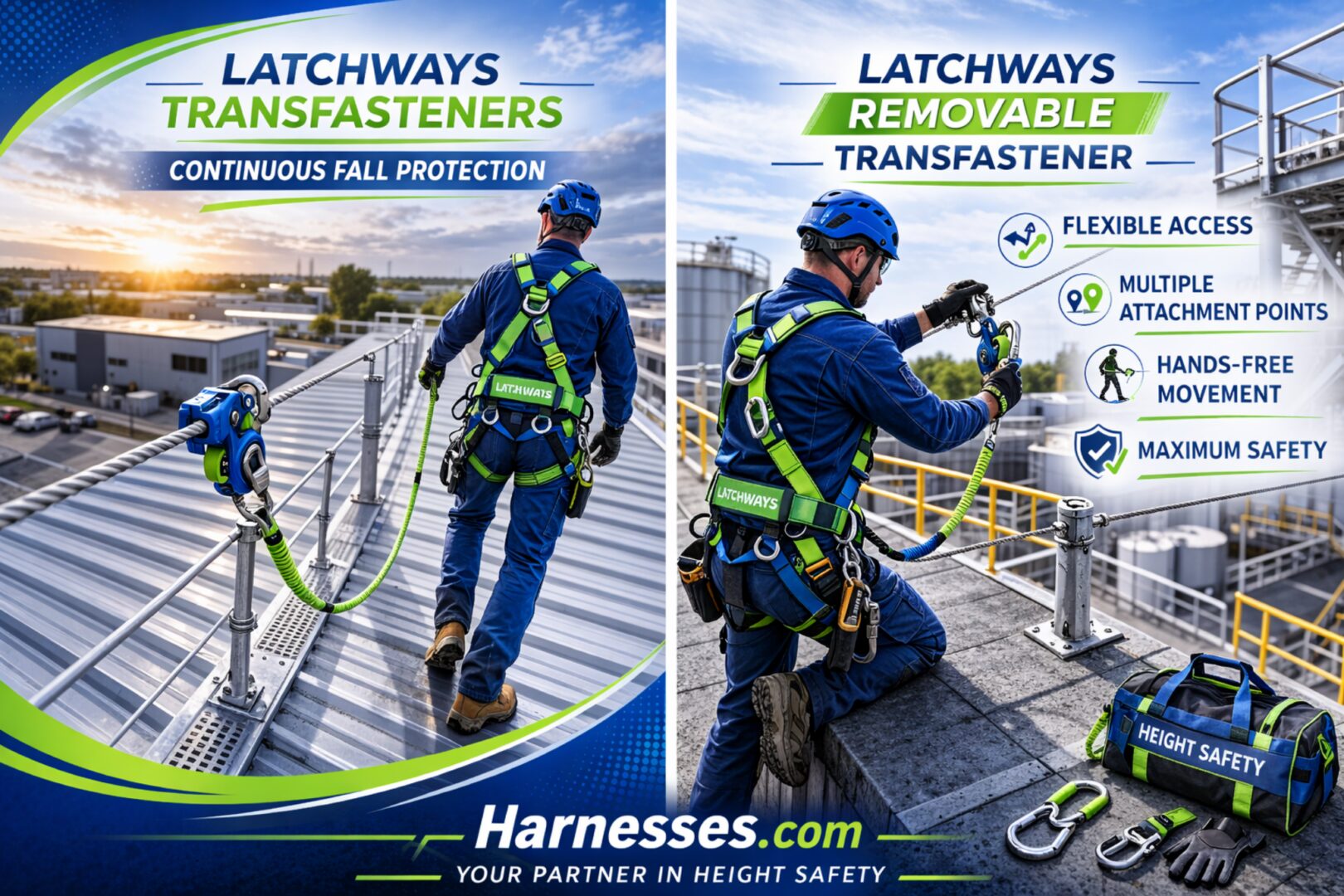
A Latchways Transfastener is a specialist attachment device used as part of a horizontal fall protection system. It connects a worker’s full body harness to a fixed lifeline cable, allowing the user to move freely along the system while remaining continuously protected against falls.
The key feature of a Latchways Transfastener is its patented starwheel mechanism. This design allows the device to glide smoothly along the lifeline cable without the need for manual adjustment. Unlike traditional systems that may require users to disconnect and reconnect at intermediate brackets or anchor points, a transfastener passes these points automatically. This hands free operation significantly reduces the risk of user error.
By maintaining constant attachment to the safety line, the Latchways Transfastener improves both efficiency and safety, particularly in environments where workers need to travel long distances along rooftops, walkways, or structural steelwork.
Latchways Transfastener vs Latchways Removable Transfastener
Both the standard Latchways Transfastener and the Latchways Removable Transfastener are designed to provide secure connection to a horizontal lifeline. However, there are important differences that determine which version is most suitable for a specific application.
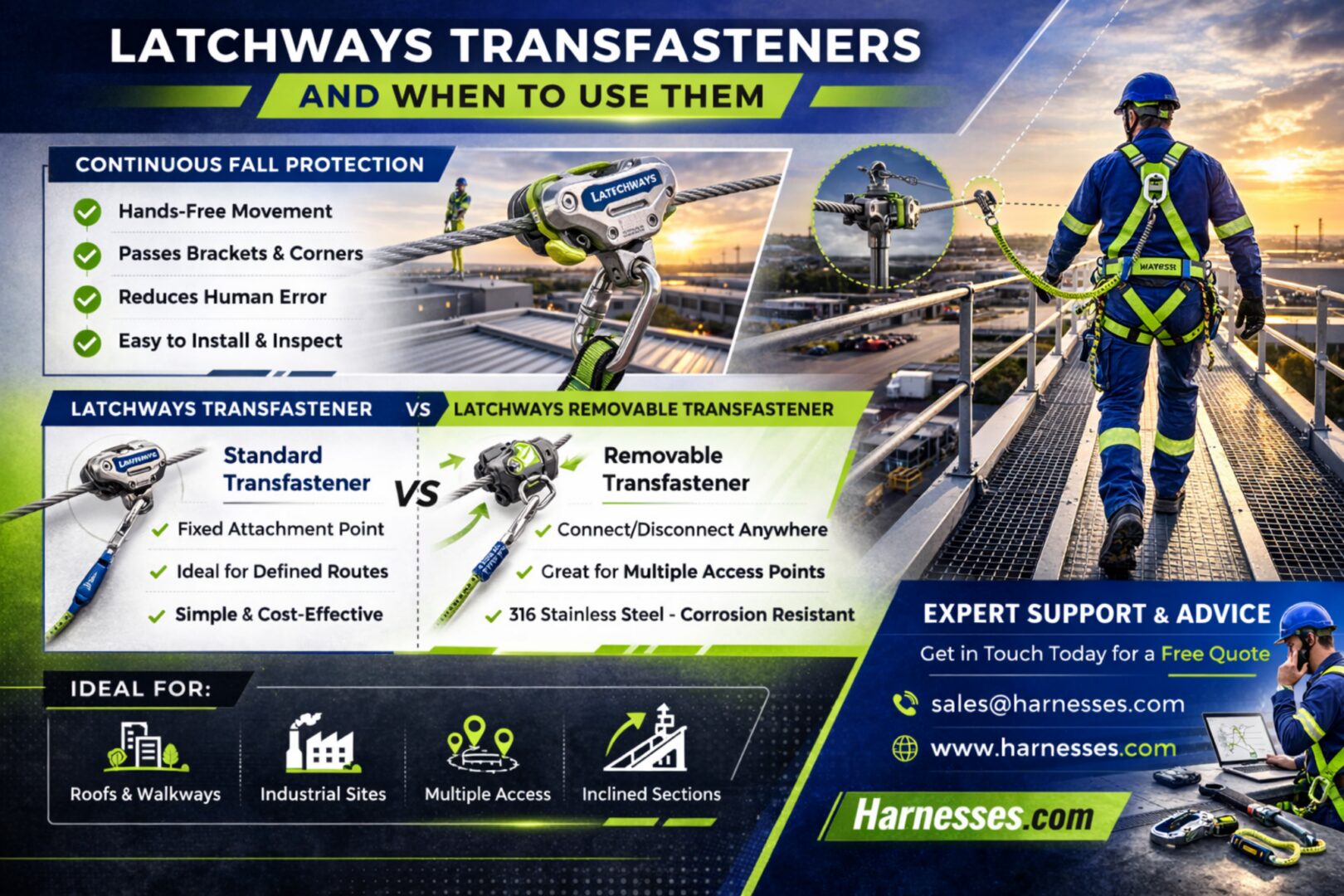
The standard Latchways Transfastener is typically installed onto the lifeline at a fixed point. Once attached, it remains on the cable and travels along its length as the user moves. This type is ideal for systems with defined entry and exit points where users attach at one location and detach at another.
It is commonly used in environments where workflow is predictable and access routes are clearly established. Because the device remains on the system, it offers simplicity and consistency in operation.
Latchways Removable Transfastener
The Latchways Removable Transfastener offers greater flexibility. It is specifically designed to be attached to and removed from the lifeline at any approved connection point along the cable. This feature is particularly valuable in complex environments with multiple access points.
The removable version is manufactured from high grade stainless steel, providing strength and corrosion resistance. This makes it suitable for both indoor and outdoor environments, including exposed rooftop installations and industrial facilities where harsh weather conditions are a factor.
For projects that require adaptable access or where workers may need to join or leave the lifeline at different points throughout the day, the Latchways Removable Transfastener is often the preferred solution.
How Do Transfasteners Work?
The Latchways Transfastener operates using a unique starwheel system that grips and rolls along the lifeline cable. As the worker moves, the wheels rotate smoothly along the cable, allowing continuous travel without interruption.
One of the main advantages of this system is its ability to pass intermediate brackets and corner assemblies without requiring the user to disconnect. This ensures that the worker remains attached at all times, reducing exposure to risk.
In the event of a fall, the transfastener locks onto the cable and works in conjunction with the overall lifeline system to arrest the fall safely. Energy is absorbed and distributed through the system according to its design specifications, helping to minimise forces on the user.
With the Latchways Removable Transfastener, the connection and disconnection process is controlled and secure. Users can install or remove the device when necessary, provided this is done in accordance with training and manufacturer guidance.
When to Use a Latchways Transfastener
Choosing the right fall protection equipment depends on the working environment, access requirements, and the level of flexibility needed. Below are some common scenarios where a Latchways Transfastener or Latchways Removable Transfastener is particularly effective.
Horizontal Lifeline Systems
These devices are primarily used with horizontal cable fall arrest systems. They are ideal for rooftops, gantries, bridges, and other structures where workers need to move laterally across an area while remaining protected. Continuous attachment ensures that safety is maintained throughout the entire working zone.
Complex Roof Layouts
On buildings with changes in direction, corners, or multiple support brackets, a Latchways Transfastener provides smooth travel without manual intervention. This allows workers to focus on their tasks rather than managing connection points.
Multiple Access Points
Where access to the lifeline may occur at different points, the Latchways Removable Transfastener offers greater flexibility. Maintenance teams, contractors, and inspection personnel often benefit from being able to connect to the system at the most convenient location.
Industrial and Harsh Environments
Manufacturing plants, energy facilities, and infrastructure projects often expose equipment to challenging conditions. The robust stainless steel construction of the Latchways Removable Transfastener ensures durability and long term performance in demanding settings.
Reducing Human Error
Systems that require repeated disconnection and reconnection increase the risk of mistakes. By enabling continuous attachment, Latchways Transfasteners help reduce the likelihood of unsafe practices. This makes them particularly valuable in environments where safety culture and compliance are priorities.
Compliance and Standards
Fall protection systems must meet strict safety standards to ensure reliability and legal compliance. Latchways systems are designed and tested in accordance with recognised European and international standards for horizontal lifeline systems.
Using certified components such as a Latchways Transfastener ensures compatibility within the overall system and provides confidence that the equipment has undergone rigorous performance testing. Employers have a responsibility to ensure that all fall protection solutions are compliant with applicable regulations and suitable for the intended application.
Installation and Training
While high quality equipment is essential, correct installation and proper training are equally important. Horizontal lifeline systems incorporating Latchways Transfasteners should be installed by qualified professionals who understand the structural requirements and load calculations involved.
Workers must also receive appropriate training on how to use the system safely. This includes understanding how to connect a harness correctly, how the transfastener travels along the cable, and how to inspect the equipment before use.
Regular inspection and maintenance of both the lifeline and the transfastener are critical to maintaining performance and safety over time. Scheduled inspections help identify wear, corrosion, or damage before they become hazards.
Conclusion
The Latchways Transfastener and Latchways Removable Transfastener are advanced solutions for horizontal fall protection. Their innovative starwheel design allows smooth, continuous movement along lifeline systems while maintaining constant attachment. This improves safety, enhances efficiency, and reduces the potential for user error.
The choice between a standard Latchways Transfastener and a Latchways Removable Transfastener depends on the access requirements of the site. For fixed routes with defined entry points, the standard model may be sufficient. For more complex environments with variable access, the removable version offers additional flexibility.
By selecting the right system and ensuring proper installation and training, organisations can create safer working conditions for anyone operating at height.
Speak to the Height Safety Specialists
Choosing the right fall protection system is essential for maintaining compliance and protecting your workforce. Whether you need guidance on selecting a Latchways Transfastener, advice on when to use a Latchways Removable Transfastener, or support designing a complete horizontal lifeline solution, our team is here to help.
At Harnesses.com, we supply industry-leading height safety equipment backed by expert knowledge and practical experience. We can assist with product selection, technical specifications, and ensuring compatibility within your existing fall protection system.
To discuss your requirements or request a quotation, contact our team today. We are ready to help you find the safest and most effective solution for your working at height needs.