
Inertia Reels vs SRLs Understanding the Key Differences
When it comes to working at height equipment, choosing the right fall protection equipment is critical for safety, compliance, and efficiency. Two commonly used systems in fall arrest equipment are Inertia Reels and SRLs, also known as Self Retracting Lifelines. While these terms are often used interchangeably, there are subtle but important differences that can impact your personal fall arrest system.
In this guide, we explain the key differences, applications, and advantages of each, helping you select the right solution for your height safety equipment needs.
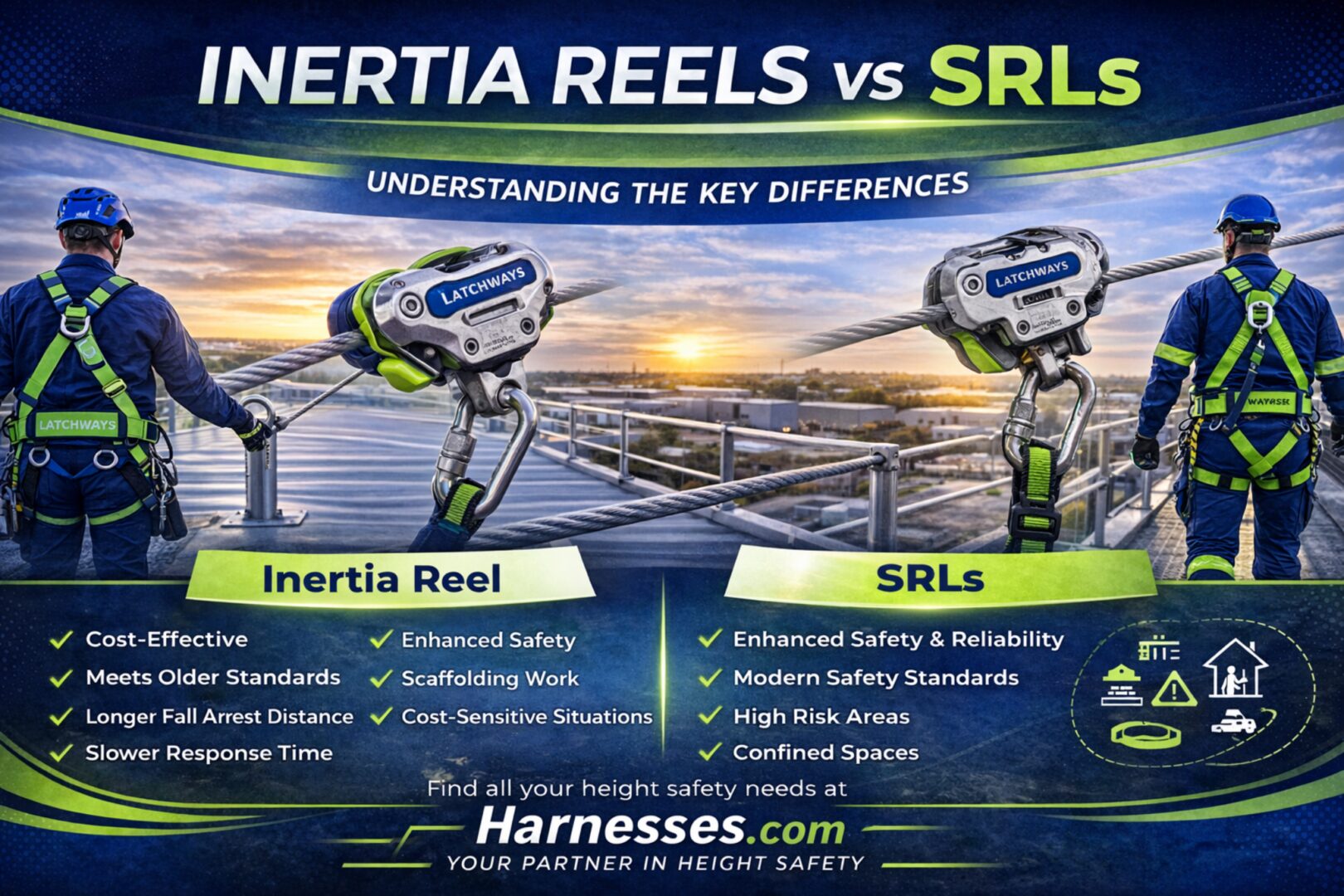
What Are Inertia Reels
Inertia Reels are mechanical devices designed to arrest a fall quickly by locking a retractable line when sudden acceleration occurs. They are a core component of many fall arrest systems and are widely used across construction, roofing, and industrial environments.
An inertia reel works in a similar way to a seatbelt. The line extends and retracts smoothly during normal movement but locks instantly during a fall, reducing free fall distance and minimising the risk of injury.
Key features of Inertia Reels include an automatic locking mechanism during a fall, a retractable line made from either steel cable or webbing, and suitability for vertical or horizontal use depending on the model. They are commonly used with a full body harness or fall arrest harness as part of a complete fall protection harness system.
What Are SRLs
SRLs, or Self Retracting Lifelines, are a more advanced form of inertia reel designed to meet stricter modern safety standards. While all SRLs are technically inertia reels, not all inertia reels meet SRL classifications.
SRLs are engineered for improved performance in fall protection PPE systems and are widely used in advanced height safety systems. They are particularly popular in high risk environments where enhanced safety and reliability are essential.
Key features of SRLs include a faster locking response time, reduced fall arrest distance, improved energy absorption, and a more compact and lightweight design. They are designed to integrate seamlessly into personal fall arrest equipment and are often included in harness kits, MEWP kits, and roofing fall protection equipment.
Key Differences Between Inertia Reels and SRLs
Although both systems perform a similar function, there are several important differences that set them apart.
Standards and certification are a major factor. SRLs are manufactured to meet more stringent modern standards, making them more suitable for regulated environments that require high performance PPE for working at height. Inertia reels may comply with older standards depending on the model and manufacturer.
Fall arrest distance is another key difference. SRLs are designed to reduce free fall distance significantly, which can lower the risk of injury and make them more suitable for confined or high risk working environments. Inertia reels may allow slightly more movement before locking, depending on their design.
Response speed also differs. SRLs typically react more quickly to sudden movement, which improves safety in dynamic work environments such as construction sites or when using MEWP kits.
Weight and portability can also influence your choice. SRLs are often lighter and more compact, making them easier to use for extended periods. This is particularly important when used with a safety harness kit or full body safety harness during long shifts.
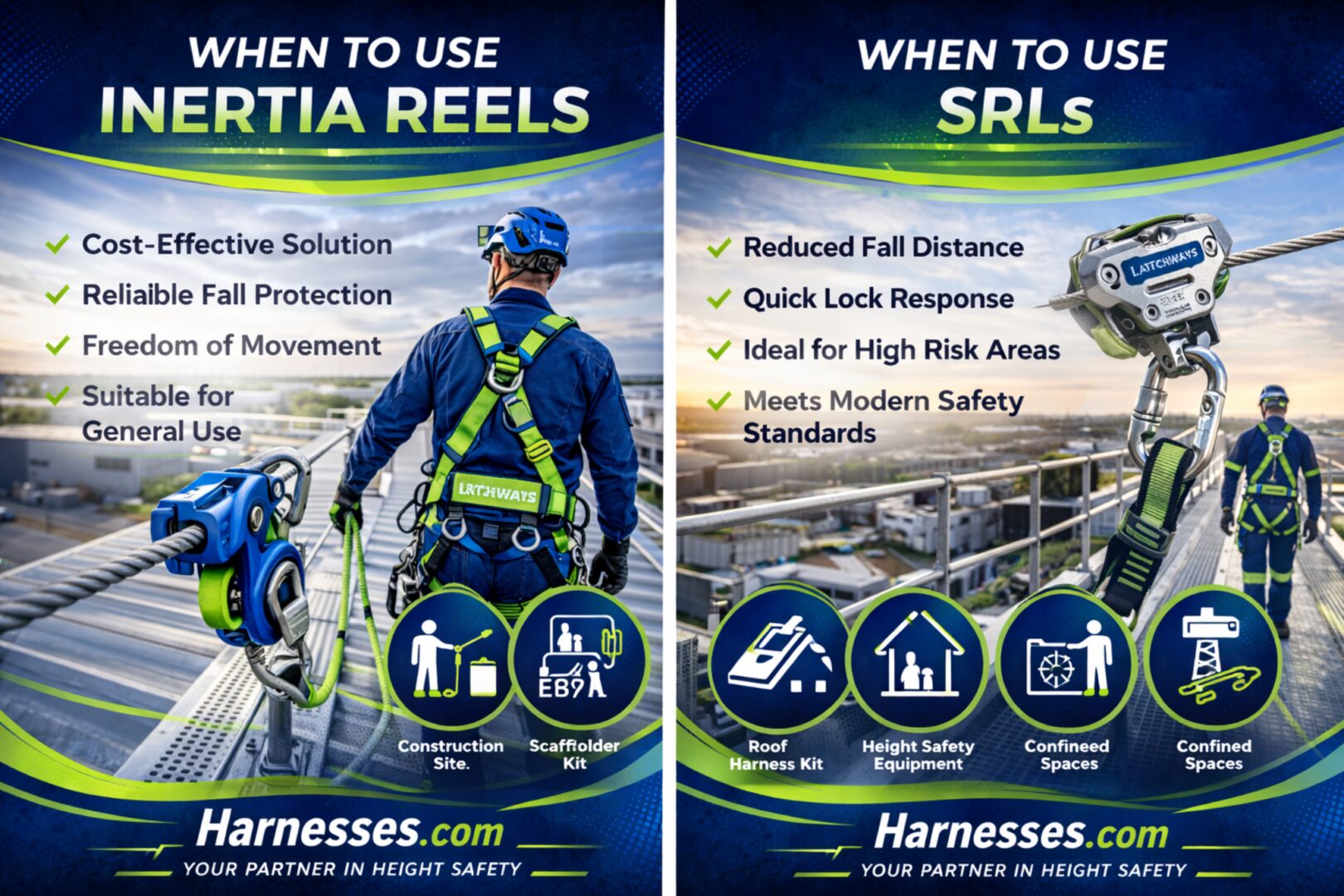
When Should You Use Inertia Reels
Inertia reels remain a reliable and cost effective solution for many applications. They are suitable for general construction harnesses, scaffolding work, and situations where workers need freedom of movement over a larger area.
They are often used as part of a broader fall protection kit, alongside safety lanyards, harness and lanyard kit combinations, and roof safety harness systems. For businesses looking for dependable fall protection PPE without the higher cost of advanced systems, inertia reels are still a practical choice.
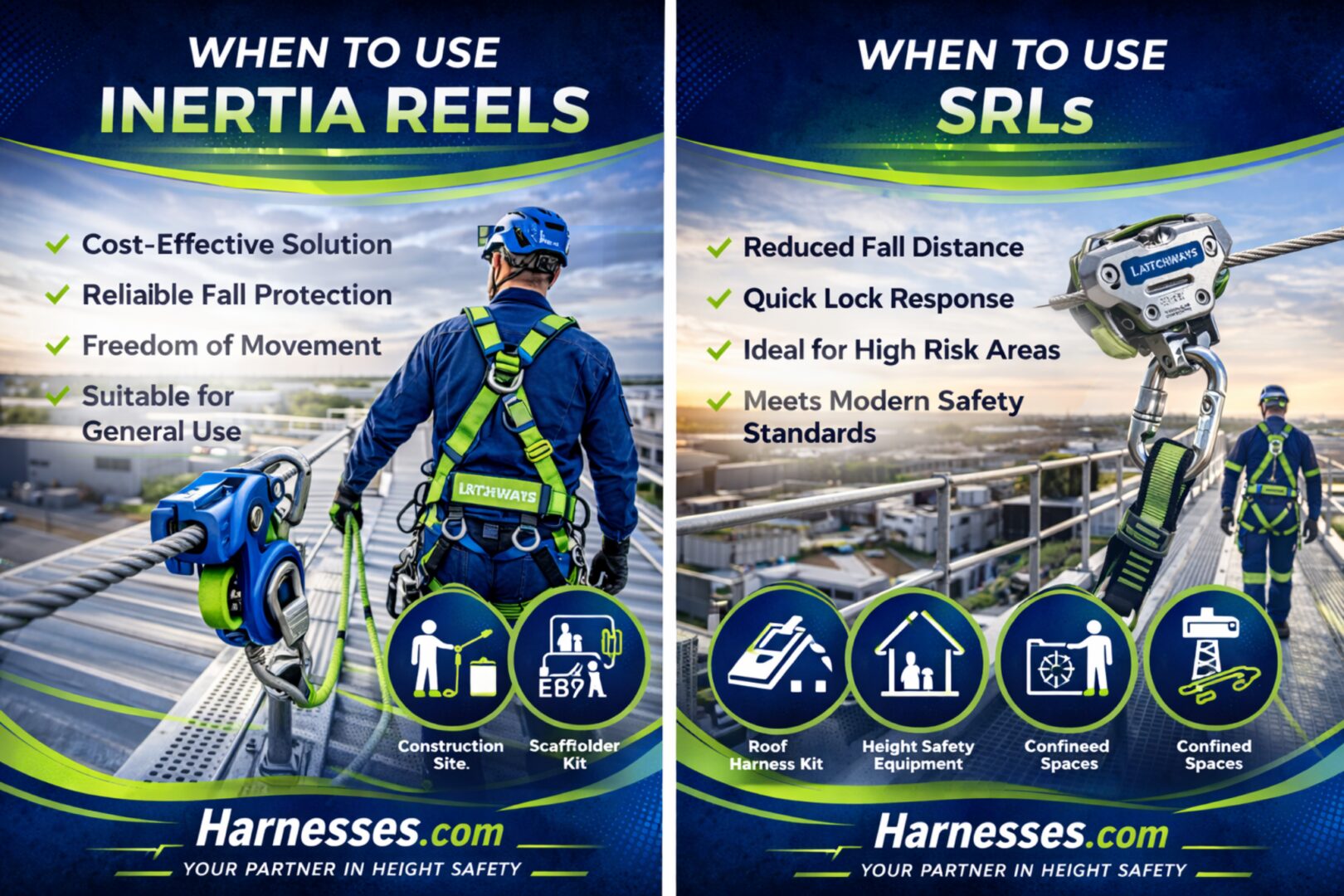
When Should You Use SRLs
SRLs are ideal for environments where maximum safety and compliance are required. They are commonly used in roofing safety equipment, confined spaces, and high risk construction projects where reducing fall distance is essential.
They are frequently paired with a full body harness, fall harness kits, and advanced height safety systems. SRLs are also commonly found in MEWP kits, where rapid locking and reduced fall distance are critical.
If your work involves frequent movement at height, such as roofing or maintenance tasks, an SRL combined with a roofing harness or roof harness kit can provide enhanced protection and confidence.
Choosing the Right Equipment
Selecting between Inertia Reels and SRLs depends on your specific application, risk level, and compliance requirements. Both systems should always be used as part of a complete personal fall arrest system, including a full body harness, appropriate anchor points, and compatible connectors.
At Harnesses.com, you will find a wide range of harnesses and fall arrest equipment from trusted brands such as Ridgegear, MSA Safety, and Kratos. Whether you need a Ridgegear harness kit, an MSA lanyard, or a Kratos safety harness, choosing certified equipment is essential for ensuring safety at height.
It is also important to consider additional equipment such as hard hats UK, roof harness anchor systems, and safety lanyards to create a complete and compliant setup.
Conclusion
Understanding the differences between Inertia Reels and SRLs is essential for selecting the right fall protection equipment. While both serve the same fundamental purpose, SRLs offer enhanced safety features, faster response times, and reduced fall distances, making them ideal for high risk environments.
Inertia reels, on the other hand, remain a dependable and cost effective option for many standard applications. By assessing your work environment and safety requirements, you can choose the most suitable system to protect your team.
For a full range of height safety gear, harness safety kits, and working at heights equipment, explore the expert selection available at Harnesses.com.