



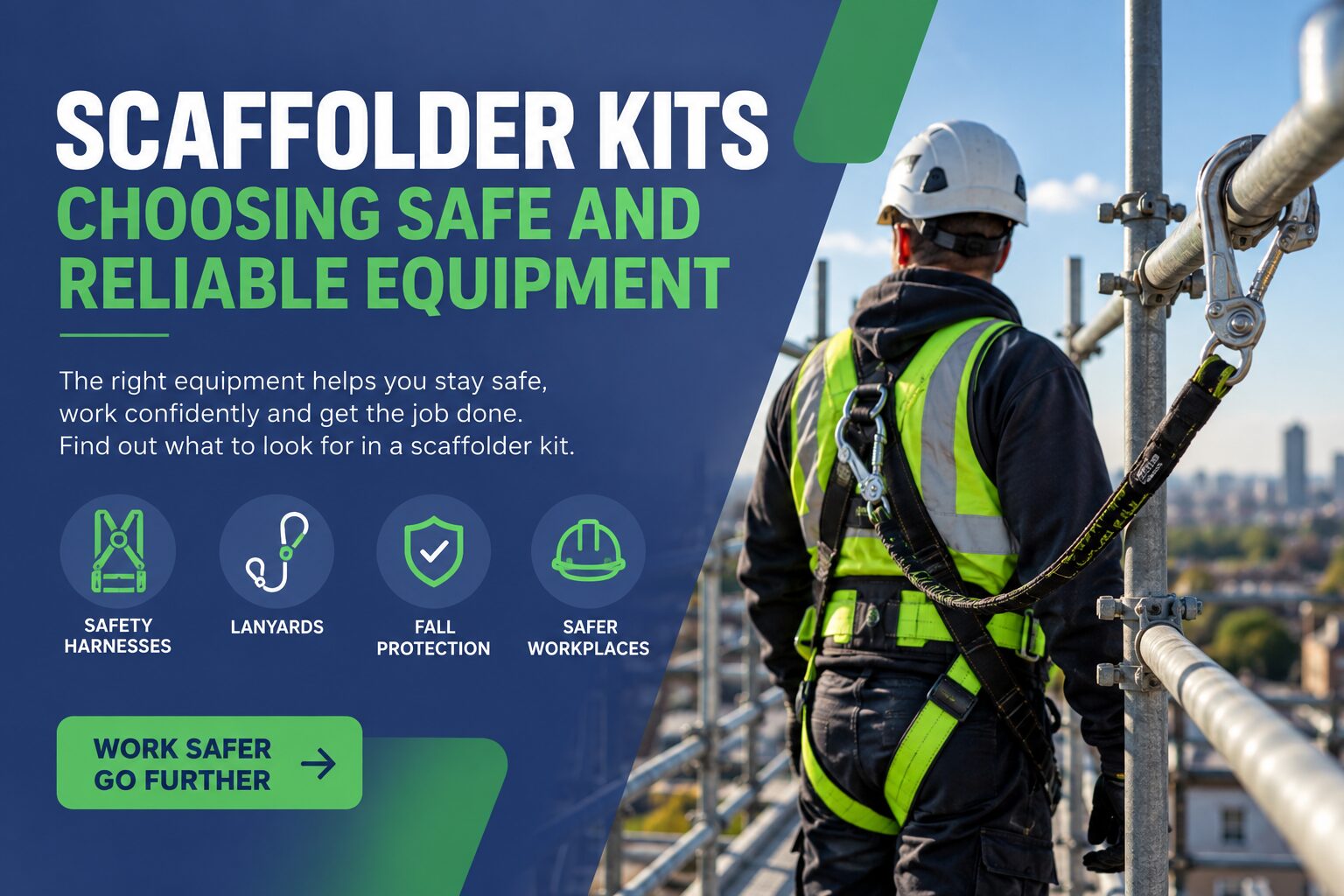
Scaffolder Kits: Choosing Safe and Reliable Equipment
Working on scaffolding means spending significant amounts of time at height, often while moving between different positions and carrying out physically demanding tasks. Having suitable safety equipment is therefore an essential part of managing risk and protecting workers.
Scaffolder kits bring together key pieces of fall protection equipment in one convenient package. Depending on the kit, this may include a full-body safety harness, lanyard, connectors and a storage bag.
However, choosing suitable equipment involves more than simply finding a kit at the right price. It needs to be appropriate for the work, compatible with the wider fall protection system and correctly fitted, inspected and maintained.
So, what should you consider when choosing safe and reliable scaffolder equipment?
What Is Included in a Scaffolder Kit?
The exact contents of scaffolder kits vary depending on the manufacturer and intended application. A typical kit may include:
- A full-body safety harness
- A fall arrest or restraint lanyard
- An energy absorber where required
- Connectors or scaffold hooks
- A storage bag or rucksack
Purchasing equipment as a kit can make it easier to source key components together. However, it remains important to check the specifications and ensure the equipment is suitable for the task.
Different working environments can present different risks, so there is no single kit that is automatically suitable for every scaffolding job.
Choosing the Right Safety Harness
A safety harness is one of the most important components within a scaffolder kit.
Full-body harnesses are designed to support the wearer as part of a personal fall protection system. Different models may feature various attachment points, adjustment options and designs to suit particular applications.
Correct fit is essential. A harness should be adjusted to the individual wearer in accordance with the manufacturer’s instructions. Comfort should also be considered, particularly when equipment will be worn for extended periods.
Features such as adjustable straps, practical buckle systems and freedom of movement can make equipment more comfortable to use throughout the working day.
Select the Appropriate Lanyard
The lanyard connects the harness to an appropriate anchor or another specified part of the fall protection system.
Different lanyards are intended for different applications. A fall arrest lanyard incorporating an energy absorber, for example, is designed to help manage the forces generated when arresting a fall.
A work restraint system serves a different purpose. Rather than arresting a fall after it happens, restraint equipment is intended to prevent the worker from reaching a position where a fall could occur.
Length, connector type, anchorage arrangements and available clearance can all influence which equipment is appropriate. Always consider how the components will function together as a complete system.
Understand Fall Arrest and Work Restraint
Understanding the difference between fall arrest and work restraint is important when choosing equipment.
A restraint system prevents a user from reaching an area where they could fall. Fall arrest equipment is designed to safely arrest a fall should one occur.
Simply wearing a harness does not provide complete protection from working-at-height risks. The harness, lanyard, connectors and anchorage arrangements all need to be appropriate for the application.
Health and Safety Executive (HSE) guidance also sets out a hierarchy for working at height. Where reasonably practicable, work at height should be avoided. Where this is not possible, falls should be prevented, with measures used to minimise the distance and consequences of a fall where the risk cannot be eliminated.
Check Equipment Compatibility
Individual pieces of fall protection equipment should never be considered completely in isolation.
Harnesses, lanyards, connectors and anchorage arrangements need to work together correctly. Always check the manufacturer’s instructions and ensure the individual components are compatible and suitable for their intended use.
Emergency procedures should also be considered before work begins. An appropriate rescue plan is an important part of planning work at height, particularly when personal fall protection systems are being used.
Inspect Equipment Regularly
Even high-quality scaffolder equipment requires regular checks and appropriate maintenance.
Before use, inspect equipment for visible signs of wear, deterioration or damage. Particular attention should be given to areas such as:
- Harness webbing and stitching
- Buckles and adjustment points
- Connectors and hooks
- Lanyards and energy absorbers
- Harness attachment points
Equipment should also undergo the appropriate detailed examinations by a competent person in line with relevant requirements and manufacturer guidance.
If equipment is damaged, has been involved in a fall or raises concerns during an inspection, it should be removed from service and dealt with according to the appropriate procedures.
Store Your Equipment Correctly
Correct storage can help protect fall protection equipment when it is not being used.
Harnesses and lanyards should be kept away from anything that could cause unnecessary damage or contamination, including sharp objects and unsuitable chemicals. Manufacturer instructions should always be followed regarding cleaning and storage.
A dedicated kit bag or rucksack can make equipment easier to transport while helping to keep components together and protected between jobs.
Training and Competence Are Essential
Reliable equipment still needs to be used correctly.
Workers should have the appropriate skills, knowledge and training to use personal fall protection equipment safely. This includes understanding how to put on and adjust a harness, connect the system correctly and identify signs that equipment may be unsuitable for continued use.
Work at height should be properly planned and carried out by competent people. PPE forms part of that approach rather than replacing appropriate working procedures and other risk controls.
Here at Harnesses.com
Choosing dependable equipment is important when working at height. Our range includes scaffolder kits, safety harnesses, lanyards and related fall protection equipment for professional applications.
With more than 25 years of experience in the safety equipment industry, Harnesses.com offers equipment from established manufacturers, including Ridgegear and Kratos. Whether you are looking for a complete kit or individual components, you can explore a range of options for different working-at-height requirements.
Shop Scaffolder Kits
Looking for new equipment? Browse our scaffolder kits and wider selection of fall protection products online.
From complete harness and lanyard kits to individual harnesses, lanyards and connectors, you can find professional equipment for a variety of working-at-height applications.
Shop now and explore our scaffolder and fall protection equipment.
Contact Us
Need more information about a product before ordering? Get in touch with the Harnesses.com teamhttps://harnesses.com/contact-us/ for product information and assistance with the options available.
Call 023 9246 6416 or email in**@*******es.com.
Alternatively, browse our full range online to find the fall protection equipment you need.