



Scaffolder Kits: Choosing Safe and Reliable Equipment
Working on scaffolding exposes workers to significant risks, particularly when erecting, altering or dismantling structures at height. Choosing the right Scaffolder Kits, therefore, is not simply about convenience. The equipment must suit the task, working environment, fall-protection system and individual user.
A typical scaffolder safety setup may incorporate a Full Body Harness, appropriate Safety Lanyard, connectors and other Fall Protection Equipment selected according to a site-specific risk assessment. However, personal protective equipment should never be considered a substitute for effective planning and collective protection. HSE guidance prioritises avoiding work at height where reasonably practicable, then preventing falls through collective measures before relying on personal fall protection.
For contractors searching for Harnesses UK, understanding what makes a safe and reliable scaffolder kit can help ensure equipment is appropriate for the intended application.
What Is a Scaffolder Kit?
A scaffolder kit brings together compatible Height Safety Equipment required for particular work-at-height activities. Depending on the application, a Safety Harness Kit might include a full body harness, energy-absorbing lanyard, connectors and suitable storage.
The exact equipment required should always be determined through a risk assessment and safe system of work. There is no universal kit suitable for every scaffolding application.
A Fall Arrest Harness is designed to form part of a wider Personal Fall Arrest System. It cannot provide protection by itself. The harness, Harness Lanyard, connectors, anchorage and other components must work together correctly.
HSE specifically notes that personal fall protection requires the individual to act for it to be effective, giving the example of correctly wearing a safety harness and connecting it via an energy-absorbing lanyard to a suitable anchor point.
Why Is the Right Safety Harness Important for Scaffolders?
A Safety Harness is an important component of many personal fall-protection arrangements.
A properly selected Full Body Safety Harness distributes forces through appropriate areas of the body if a fall-arrest system is activated. However, selecting a harness involves more than choosing a product that simply fits.
Consider the worker, the task, compatibility with other equipment, required attachment points and working conditions. A harness also needs to be correctly adjusted according to its manufacturer’s instructions.
When comparing Harness Safety Kits, buyers should therefore consider the complete system rather than individual components in isolation.
Brands available within the wider height-safety market include Ridgegear, Kratos and MSA Safety, with options such as Ridgegear Harnesses, Kratos Harnesses and MSA equipment designed for different professional applications.
Harness and Lanyard Selection
A Harness and Lanyard combination is common within work-at-height equipment, but the lanyard must be appropriate for the intended system.
Different situations may require fall-arrest or restraint configurations. HSE explains that work restraint can involve a harness with a sufficiently short lanyard to prevent the user reaching a position from which they could fall.
Other applications may require an energy-absorbing Safety Harness Lanyard as part of a fall-arrest arrangement.
Whether considering a Ridgegear Lanyard, MSA Lanyard, Kratos Safety Lanyard or another compatible product, users should verify its intended application, connector configuration, length and compatibility with the rest of the system.
Never assume that any Lanyard can be combined with any harness or anchor.
Fall Arrest or Fall Restraint?
Understanding the distinction between fall restraint and fall arrest is essential when choosing Scaffolder Kits.
Fall restraint aims to prevent the user from reaching a location where a fall can occur. Fall Arrest Equipment, meanwhile, is intended to arrest a fall after it begins and minimise its consequences.
This distinction affects the required Harness Equipment, anchor arrangement, clearance calculations and rescue planning.
For scaffolding specifically, HSE states that the priority is establishing collective fall protection, minimising workers’ exposure to fall risks and reducing reliance on personal protective equipment such as harnesses and lanyards.
A Fall Protection Kit should consequently be selected only as part of a properly planned system rather than treated as a standalone safety solution.
Consider Inertia Reels and SRLs Where Appropriate
Some work-at-height systems may use Inertia Reels, also known as SRLs or self-retracting lifelines.
A Retractable Lanyard can extend and retract as the user moves while its braking mechanism is designed to respond to a fall. These devices may be useful in appropriate applications, but suitability depends on factors including the anchorage location, required clearance, working environment and manufacturer’s instructions.
The selection of Fall Arresters should therefore be undertaken by a competent person as part of the overall fall-protection strategy.
Specialist systems can also incorporate equipment such as Latchways Transfastener or Latchways Removable Transfastener components where compatible with the installed safety system.
Inspection and Maintenance Matter
Buying quality PPE for Working at Height is only the beginning. Equipment needs to remain fit for use throughout its service life.
Users should conduct pre-use checks and immediately report damage or suspected defects. HSE guidance recommends a user pre-use check at the beginning of each shift. It also recommends formally recorded detailed inspections at least every six months, with inspections potentially increased to at least every three months for frequently used equipment in arduous environments such as scaffolding. Inspection frequency should ultimately reflect the risk assessment and equipment conditions.
Always follow the manufacturer’s inspection, maintenance, storage and retirement requirements for the particular product.
Plan for Rescue Before Work Begins
Fall protection does not finish when a fall is arrested.
Work at height must include suitable emergency and rescue planning. HSE states that employers should plan for emergencies and rescue and should not rely on the fire and rescue service as their primary rescue arrangement.
Depending on the risk assessment, specialist equipment such as a Personal Rescue Device, Ridgegear Rescue, MSA Rescue or Kratos Rescue solution may form part of a wider rescue plan.
Workers expected to use rescue equipment must have appropriate information, instruction and training.
Look Beyond the Harness
Effective Fall Protection PPE often extends beyond the harness itself.
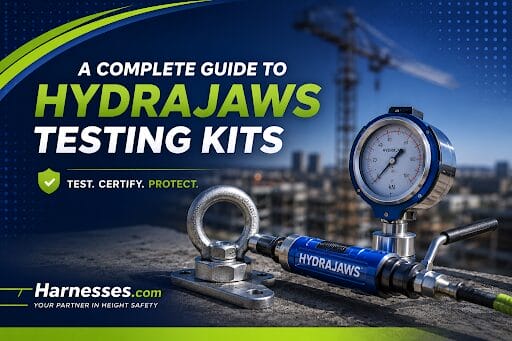
Depending on the workplace and risk assessment, equipment requirements may include suitable head protection, anchorage solutions, connectors, Lanyards, SRLs and rescue equipment. Buyers searching for Hard Hats UK, Hydrajaws Testing Kit, Free Standing Weighted Units or other specialist Working at Height Equipment should consider how every component fits within the overall safety system.
The same principle applies to task-specific solutions. MEWP Kits, Roof Harness Kits, Roof Safety Harness Kits, Roofing Fall Protection Kits and scaffolder kits are designed around different working situations. Equipment intended for one application should not automatically be assumed suitable for another.
Choosing Between Ridgegear, Kratos and MSA Equipment
Recognised manufacturers such as Ridgegear, Kratos and MSA offer a wide range of height-safety products.
Options may include a Ridgegear Harness, Ridgegear Kit or Ridgegear Harness Kit, as well as Kratos Safety Harness, Kratos Safety Kit and Kratos Harness Kit configurations. Contractors may similarly consider an MSA Kit or MSA Harness Kit where appropriate.
Brand alone, however, should not determine the decision.
The priority is selecting equipment that is suitable for the specific task, user and complete safety system, while ensuring compatibility and compliance with applicable requirements and manufacturer instructions.
How Do You Choose the Right Scaffolder Kit?
Start with the risk assessment rather than the product catalogue.
Identify the hazards, determine whether work at height can be avoided and prioritise collective protection. Where personal protection remains necessary, establish whether the system is intended for restraint or fall arrest and identify suitable anchorage, clearance, rescue and compatibility requirements.
HSE requires work at height to be properly planned and organised, carried out by competent people, and undertaken using appropriately selected, inspected and maintained equipment.
Only then should you select the appropriate Height Safety Harness, lanyard and associated equipment.
Find Scaffolder Kits and Fall Protection Equipment at Harnesses.com
Choosing dependable Scaffolder Kits means looking at the complete safety system rather than simply purchasing a harness and lanyard.
Harnesses.com provides access to specialist Harnesses and Fall Protection equipment for professional work-at-height applications, including harnesses, lanyards and task-specific safety solutions.
Whether you are researching a Fall Harness, Construction Harnesses, Safety Harness and Lanyard, Harness and Lanyard Kit or broader Personal Fall Arrest Equipment, equipment should always be selected according to the task, risk assessment and manufacturer’s instructions.
Explore Harnesses.com to find suitable Harnesses, Lanyards, Fall Protection Equipment and Height Safety Gear for your work-at-height requirements.